Hitler’s Rhetorical Playbook: Persuasive Strategies for Tyranny and Genocide
By Ryan Skinnell
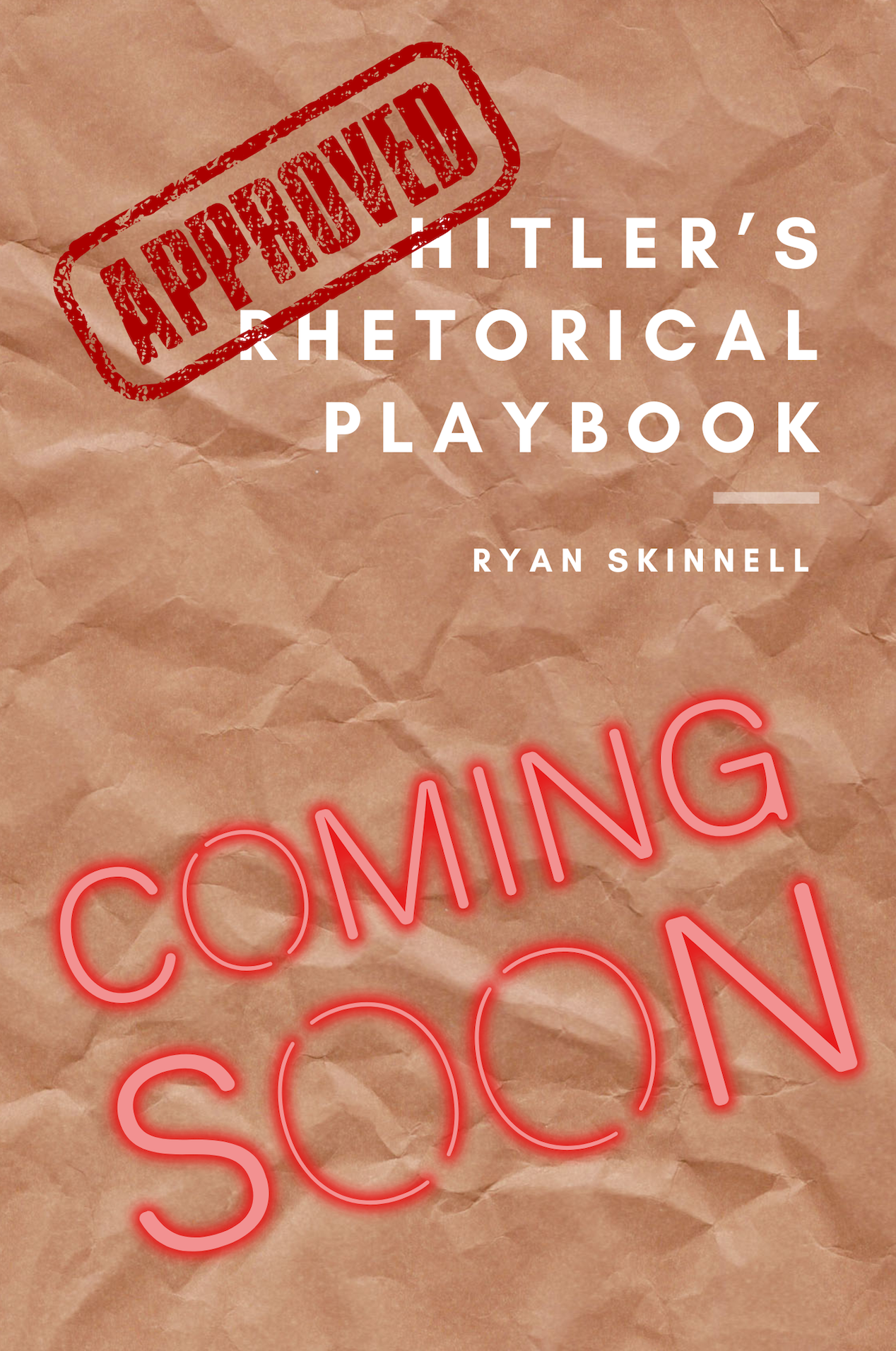
Adolf Hitler is the archetype of an evil demagogue. For more than a century, however, even his most perceptive critics have misunderstood his persuasive powers, reducing them to a simple list of nasty tricks or chalking them up to “the magic power of the spoken word.” But Hitler’s persuasive talents were neither simplistic nor magical. They were rhetorical.
Hitler’s Rhetorical Playbook: Persuasive Strategies for Tyranny and Genocide examines how Hitler used rhetoric to persuade millions of people to support, or at least acquiesce to, Nazism. Drawing on original research, primary documents, and scholarship across more than a dozen disciplines, Dr. Ryan Skinnell explains how Hitler learned rhetoric, how he used it to attract and radicalize supporters, and how he turned good rhetoric to the evilest ends. Hitler was unquestionably a gifted theorist and practitioner of persuasion, but as it turns out, he was working from a deeply-rooted, decipherable rhetorical playbook. Deciphering Hitler’s rhetoric helps us make sense of his rise and reign, and it can help us recognize how his rhetoric remains malignantly effective nearly a century after his death.
Forthcoming in spring 2027 from the University of Tennessee Press
For more, visit https://hitlersrhetoric.com/
 Dr. Ryan Skinnell